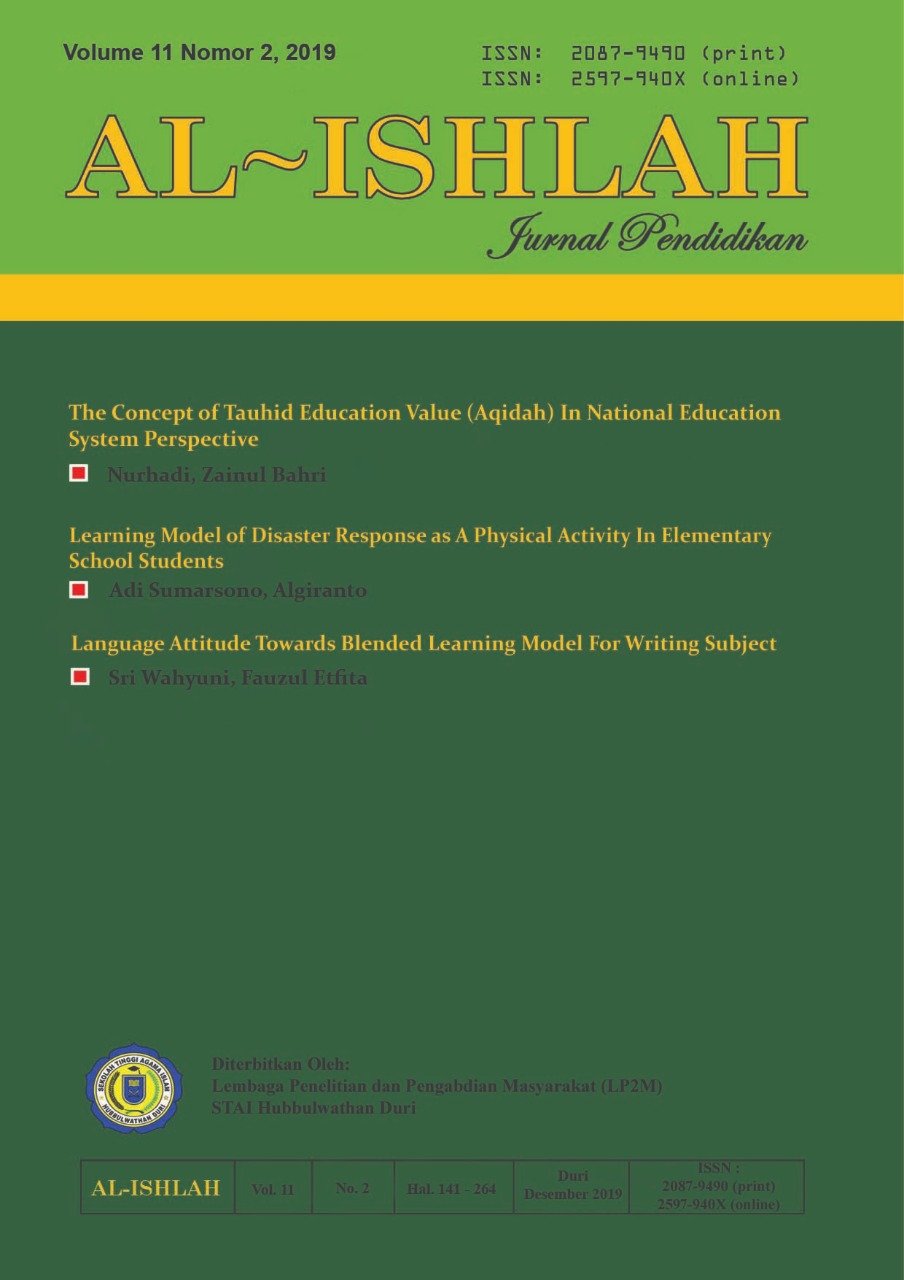
LEARNING MODEL OF DISASTER RESPONSE AS A PHYSICAL ACTIVITY IN ELEMENTARY SCHOOL STUDENTS
DOI:
https://doi.org/10.35445/alishlah.v11i2.132Keywords:
Game, Physical ActivityAbstract
This study aims to produce a type of game through physical activities that are in activies that are in accordance with physical education learning materials in elementary schools. This research also test the effectivenes of the products that have been produced. This development research methods refers to the Borg and Gall development step which consistes of ten development steps. The result of study are the creation of a type of game with the name og the name the game disaster response. The specifications of this game are the types of games that are carried out in the form of physical activities in which there are fundamental movements (locootor, non locomotor and manipulative motion). These three types of motion correspond to physical education materials in elementery schools. The results of this development product are saved in the form of VCD tutorial videos. The effectiveness test of this product was teted on two different schools and analyzed using a t test of significances 0,5 state that series of disarter response games are effective and appropriate to be used as physical education learning for elementary school students. Increased effectiveness is stated in the standard Gain which is in the category of “mediumâ€. Throught this disaster response game it can be used as basic motion learning in elementary schools as well as providing preliminary material about emergency rescue efforts in the event of a natural disaster.
References
Amri, A. (2017). Pedidikan Tangguh Bencana Mewujudkan Satuan Pendidikan Aman Bencana di Indonesia. Jakarta: P&K Press.
Brockman, R., Fox, K. R., & R, J. (2011). What is the meaning and nature of active play for today's children in the UK. International Journal of Behavioral Nutrition and Physical activity and health, Vol. 1 No. 7, 8.
Cristohper, & Ludy. (2009). Psychology Gets in the Game: sport, mind, and behavior . Londan: Nesbraka.
Dahliya, A. (2017). “Penguatan Pendidikan Karakter Melalui Kegiatan Ekstrakurikuler di sekolah. Jurnal Sosioreligi, Vol. 15 No. 1 , 54.
Desfandi, M. (2014). Urgensi Kurikulum Pendidikan Kebencanaan Berbasis Kearifan Lokal di Indonesia. Sosio Didaktika: Vol. 1, No. 2.
Graham, Hale, H., & Parker. (2009). Children moving reflective approach to teaching physical education. New York: Mc GrawHill.
I.E, E. (2014). Increasing Values of Teamwark and Responsibility of the students Through games: Integrating Education Charakter in Lectures, Journal prosedia-social nd behavioral science. Prosedia social and behavioral science, 200.
Lesmana, C., & Purborini, N. (2015). Kesiapsiagaan Komunitas Sekolah dalam Menghadapi Bencana di Kabupaten Magelang. Jurnal Teknik Sipil Volume 11 Nomor 1.
Mantasia, & Jaya, H. (2016). Model pembelajaran Kebencanaan Berbasis Virtual Sebagai Upaya Mitigasi dan Proses Addaptasi terhadap Bencana Alam di SMP. Jurnal Paedagogia penelitian dan pendidikan Vol. 19 No. 1.
Mardapi, D. (2008). Teknik penyusunan instrumen tes dan non tes. Yogyakarta: Mitra Cendekia Press.
Mumpuniarti. (2003). Penanganan anak tuna grahita (kajian dari segi pendidikan, social-psikologis dan tindak lanjut usia dewasa. Yogyakarta: FIP UNY Press.
Perez, L. A., Pedro, Bush, & Michael. (2013). Effects of different backpack loads in acceleration transmission during recreational distance walking . Journal of Human Kinetics, Vol. 3 No.7, 81.
Rosali, E. S. (2016). Peranan Pembelajaran Geografi dalam Pemahaman Bencana Gunung Api pada Peserta Didik SMA di Daerah Rawan Bencana Gunung Guntur. Jurnal Geografi, Volume 4 Nomor 1.
Sugiyono. (2010). Metode penelitian kuantitatif, kualitatif dan R&D. Bandung: Alfabeta.
Suhada, F., Khairuddin, & Dirmansyah. (2014). Identifikasi Kesiapsiagaan Komunitas Sekolah SMA Negeri 2 Kluet Utara dalam Menghadapi Bencana Gempa Bumi dan Tsunami. Jurnal Pendidikan Kebencanaa, Volume 1, No. 2.
Suharjana. (2013). Kebugaran Jasmani. Yogyakarta: Jogja Global Media.
Sukadiyanto, & Muluk, D. (2010). Pengantar teori dan metodologi melatih fisik. Bandung: CV. Lubuk Agung.
Sumarsono, A. (2017). Implementasi model pembelajaran atletik melalui permainan berbasis alam. Jurnal Magistra Vol. 4 No. 2 .
Sumarsono, A., & Sianturi, M. (2018). Implementation Interactive Media and Characterized Meme Media: A Comparation Study. Journal of Education and Vocational Research (ISSN 2221-2590) Vol. 9, No. 1.
Suryani, I., Sari, S. A., & Milfayetty, S. (2014). Model Quantum Teaching dalam Meningkatkan Pengetahuan Kesiapsiagaan Bencana Gempa Bumi di Sekolah Dasar 19 Banda Aceh. Jurnal Biotik, ISSN: 2337-9812, Vol. 2, No. 2.
Susanti, R., Sari, S. A., Milfayeety, S., & Dirmansyah. (2014). Hubungan Kebijakan, sarana dan prasarana dengan Kesiapsiagaan Komunitas Sekolah SIaga Bencana Banda Aceh. Volume 1, No. 1
Downloads
Additional Files
Published
How to Cite
Issue
Section
Citation Check
License
Authors who publish with this journal agree to the following terms:
- Authors retain copyright and grant the journal right of first publication with the work simultaneously licensed under a Creative Commons Attribution License that allows others to share the work with an acknowledgement of the work's authorship and initial publication in this journal.
- Authors are able to enter into separate, additional contractual arrangements for the non-exclusive distribution of the journal's published version of the work (e.g., post it to an institutional repository or publish it in a book), with an acknowledgement of its initial publication in this journal.
- Authors are permitted and encouraged to post their work online (e.g., in institutional repositories or on their website) prior to and during the submission process, as it can lead to productive exchanges, as well as earlier and greater citation of published work.