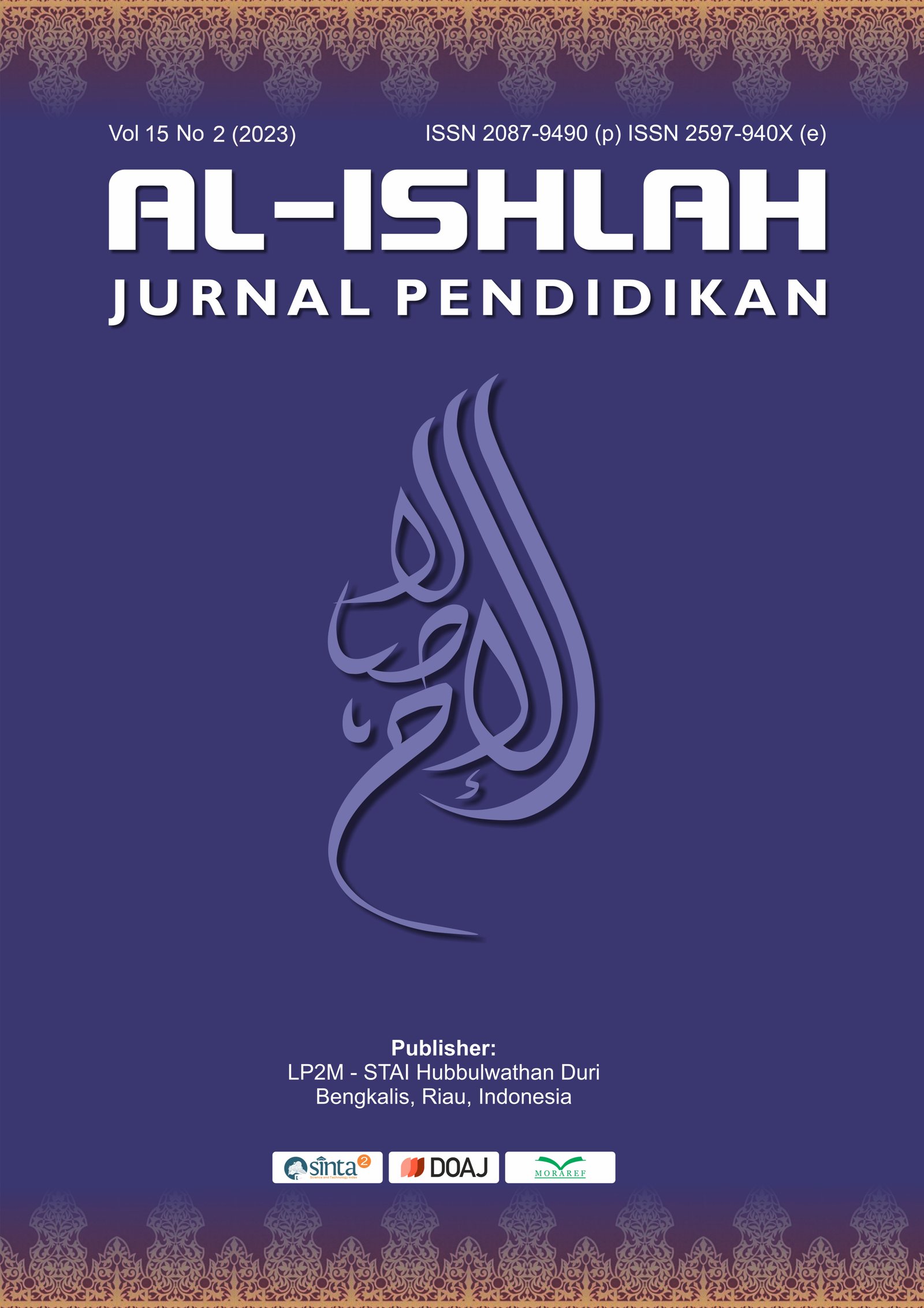
Post-Pandemic Covid-19 Analysis: The Effect of Distance Learning Toward Learning Loss in Primary School
DOI:
https://doi.org/10.35445/alishlah.v15i2.3066Keywords:
post pandemic, learning loss, primary schoolAbstract
References
Andriani, W., Subandowo, M., Karyono, H., & Gunawan, W. (2021). Learning Loss dalam Pembelajaran Daring di Masa Pandemi Corona. Prosiding Seminar Nasional Teknologi Pembelajaran Universitas Negeri Malang, (2), 485–501.
Asrilia Kurniasari, Fitroh Setyo Putro Pribowo, & Deni Adi Putra. (2020). Analisis Efektivitas Pelaksanaan Belajar Dari Rumah (Bdr). Jurnal Kajian Pendidikan Dan Hasil Penelitian, 6(3).
Assiddiqi, D. R., & Soeryanto. (2021). Peluang Menurunnya Capaian Hasil Belajar (Learning Loss) dan Alternatif Solusinya: Kajian Kasus Pembelajaran Online di Era Pandemi covid-19 Jurusan Teknik Mesin UNESA. Jurnal Pendidikan Teknik Mesin, 10(3), 47–45.
BBC News. (2022). PTM di Sekolah dikurangi jadi 50 persen di daerah PPKM level 2 di tengah lonjakan kasus Covid dan saat “orang tua murid deg-degan, guru was-was.â€
Conto, C. A., Akseer, S., & Dreesen, T. (2020). COVID-19: Effects of School Closures on Foundational Skills and Promising Practices for Monitoring and Mitigating Learning Loss. UNICEF - Innocenti Working Paper, WP 2020-13(October), 1–30.
Hevia, F. J., Vergara-Lope, S., Velásquez-Durán, A., & Calderón, D. (2022). Estimation of the fundamental learning loss and learning poverty related to COVID-19 pandemic in Mexico. International Journal of Educational Development, 88. https://doi.org/10.1016/j.ijedudev.2021.102515
Kementerian Pendidikan Nasional. (2020). SE No 15 Tahun 2020 Tentang Pedoman Pelaksanaan Belajar Dari Rumah Selama Darurat Bencana COVID-19 di Indonesia.
Locke, V. N., & Patarapichayatham, C. (2021). Learning Loss in Reading and Math in U.S. Schools Due to the COVID-19 Pandemic. (March).
Maulyda, M. A., Erfan, M., & Hidayati, V. R. (2021). Analisis Situasi Pembelajaran Selama Pandemi Covid-19 di SDN Senurus: Kemungkinan Terjadinya Learning Loss. Journal of Elementary Education, 04(03), 328–336.
Mayers, O. L. (2021). Equity in Education. 10 Perspectives on Equity in Education, 8–21. https://doi.org/10.4324/9781003093145-2
Oktaviani, D. N., & Hudah, N. (2021). Analisis Proses Belajar Dari Rumah (BDR). PEDIR: Journal Elmentary Education, 1(1), 1–10.
Perdana, R., & Suswandari, M. (2021). Literasi Numerasi Dalam Pembelajaran Tematik Siswa Kelas Atas Sekolah Dasar. Absis: Mathematics Education Journal, 3(1), 9. https://doi.org/10.32585/absis.v3i1.1385
PP. RI No. 23. (2016). Peraturan Menteri Pendidikan dan Kebudayaan No. 23 Tahun 2016 tentang Standar Isi Pendidikan Dasar Dan Menengah.
Pratiwi. (2021). DINAMIKA LEARNING LOSS: GURU DAN ORANG TUA. Jurnal EDUKASI NONFORMAL, 1(1), 147–153.
Rakhmawati, Y., & Mustadi, A. (2022). The circumstances of literacy numeracy skill: Between notion and fact from elementary school students. Jurnal Prima Edukasia, 10(1), 9–18.
Rohim, D. C., Rahmawati, S., & Ganestri, I. D. (2021). Konsep Asesmen Kompetensi Minimum Meningkatkan Kemampuan Literasi Numerasi Sekolah Dasar untuk Siswa. Jurnal Varidika, 33(1), 54–62. https://doi.org/10.23917/varidika.v33i1.14993
Siregar, S. (2018). Statistika Deskriptif Untuk Penelitian di Lengkapi dengan Perhitungan Manual dan Aplikasi SPSS Versi 17. In Rajawali Pers.
Warsiyah. (2021). Strategi Kelompok Kerja Guru (KKG) Untuk Memitigasi Learning Loss Melalui Pembelajaran Terdiferensiasi. Neo-Jer: North Borneo Journal of Educational Research, 2(1), 1–9.
Downloads
Published
How to Cite
Issue
Section
Citation Check
License
Authors who publish with this journal agree to the following terms:
- Authors retain copyright and grant the journal right of first publication with the work simultaneously licensed under a Creative Commons Attribution License that allows others to share the work with an acknowledgement of the work's authorship and initial publication in this journal.
- Authors are able to enter into separate, additional contractual arrangements for the non-exclusive distribution of the journal's published version of the work (e.g., post it to an institutional repository or publish it in a book), with an acknowledgement of its initial publication in this journal.
- Authors are permitted and encouraged to post their work online (e.g., in institutional repositories or on their website) prior to and during the submission process, as it can lead to productive exchanges, as well as earlier and greater citation of published work.